Same renewal. Different price.
Repair bills, claims costs and changing risk can move your premium – even when nothing has changed at your end.
Insurance
Imagine your insurance renewal arrives tomorrow.
You have not made a claim. You have not moved house. The car is still sitting outside and, as far as you can tell, nothing particularly dramatic has happened.
The premium has changed anyway.
It can seem difficult to explain. But an insurance premium is not simply a fixed price attached to a customer. It reflects the risk an insurer believes it is taking on and how much claims are likely to cost.
Both can change. And over the next 12 months, there are good reasons to expect at least one of them to keep moving.
Why can insurance premiums change?
Some of the reasons are personal. A claim, change of address, different car or another change in circumstances could alter the risk an insurer is being asked to cover.
But your own circumstances are only part of the picture. Insurers also have to consider how much claims are costing across the wider market. And those costs can move even when your own risk appears to have stayed exactly the same.
Take motor insurance.
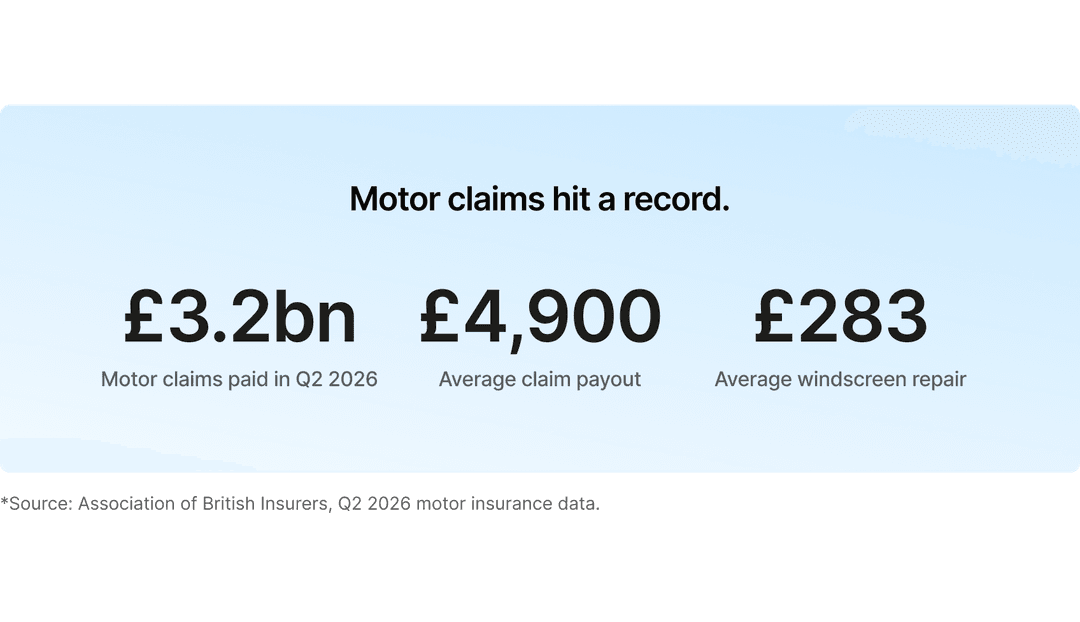
The Association of British Insurers reported record motor insurance claims of £3.2 billion during the second quarter of 2026. That was 5% higher than the previous quarter and 7% higher than a year earlier. The average claim payout reached £4,900, up 4% in three months.
Repair costs are one reason. Modern cars increasingly contain cameras, sensors and driver-assistance technology. Useful when everything is working. Potentially expensive when it isn’t.
The ABI says these technologies can make repairs and replacements more costly. Even the humble windscreen is feeling it: the average cost of a windscreen repair rose 7% during the quarter, to £283.
Home insurance works in much the same way. A burst pipe, a storm-damaged roof or a flooded kitchen can all cost more to put right when materials and tradespeople cost more. If the price of repairing or rebuilding homes rises, so can the cost of insuring them.
Higher claims costs do not automatically mean your next premium will increase. But they help explain why your price can change even when you have not made a claim yourself.
Does this mean insurance premiums are going up?
Not necessarily. Or at least, not yet.
In fact, recent UK figures show why it is worth separating claims costs from the price customers actually pay.
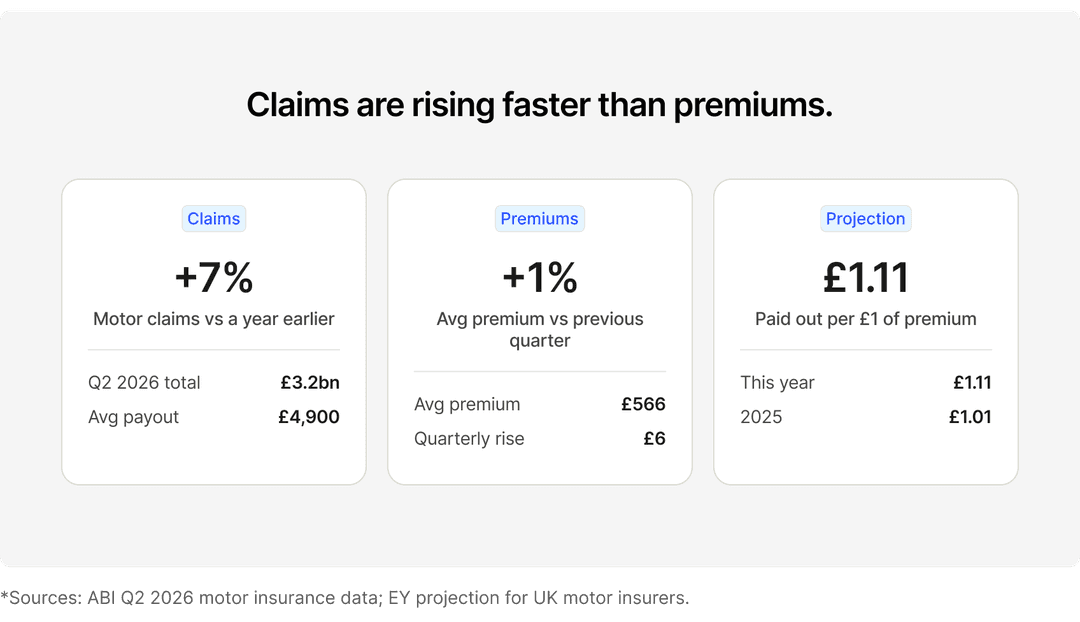
Despite record claims payouts, the ABI reported that motor insurance premiums remained relatively stable in the second quarter of 2026. The average premium paid rose by just £6, or 1%, to £566.
So insurers can face rising repair and claims costs without every customer immediately seeing a higher premium.
The question is how long that can last.
What could happen over the next 12 months?
Nobody can tell you exactly what your next renewal will look like. But there are a few things worth watching.
The first is the gap between what insurers pay out and what they take in. In the second quarter, motor claims were up 7% on a year earlier, while premiums rose 1% on the quarter before. EY has projected that UK motor insurers will pay out £1.11 in claims and expenses for every £1 of premium they collect this year, up from £1.01 in 2025.
That is not a gap insurers can carry forever. If claims costs keep rising faster than prices, the pressure to raise premiums grows.
The second is repair costs. As more cars on the road carry advanced technology, the cost of fixing them is unlikely to fall quickly. The ABI has pointed to repair-sector skills and parts availability as areas that need attention.
The third is government action. The ABI has urged the government to use the Motor Insurance Taskforce to work with insurers and the motor industry on affordability. Progress there could ease some of the pressure. But changes like that tend to take time.
None of this means your premium will definitely rise. Your own renewal will still depend on the insurer, the policy and the risk being covered.
But if your price has been fairly steady recently, it would be wise not to assume it will stay that way.
Can my insurer charge me more just because I stayed?
For home and motor insurance, there are rules governing renewal pricing.
Since January 2022, Financial Conduct Authority rules on insurance renewal pricing have prevented firms from setting a renewal price higher than the equivalent new-business price. That was designed to tackle a practice often described as ‘price walking’, where customers could end up paying progressively more after repeatedly renewing.
It does not mean your renewal price cannot rise.
If the equivalent new-business price rises because the underlying risk or cost of providing cover has changed, your renewal price can rise too.
The distinction matters. You should not pay a higher price simply because you renewed. But renewal does not freeze the underlying price of insurance.
What else can affect the price you pay?
Tax forms part of the cost of many insurance policies too.
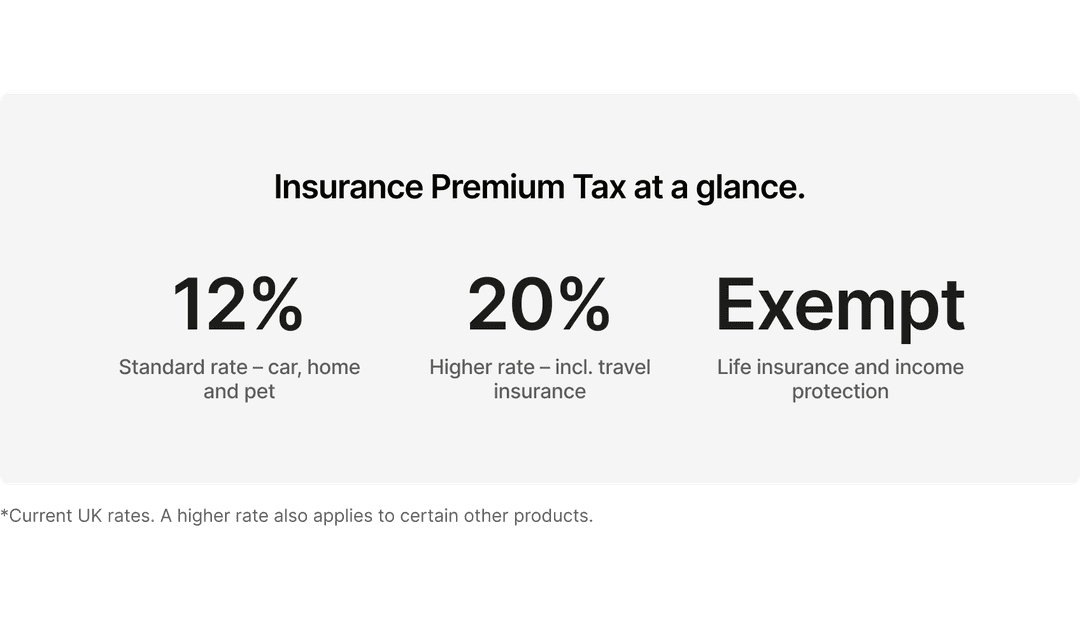
Insurance Premium Tax is currently charged at 12% on most types of UK insurance, including ordinary car, home and pet insurance. A higher 20% rate applies to travel insurance and certain other products. Life insurance and income protection are exempt.
Then there is the policy itself. Changing the level of cover, excess, optional extras or other details can alter the premium, while insurers can also reassess the risks associated with factors such as your vehicle or location.
So, when your next renewal arrives, do not look only at whether the number has gone up or down.
Check whether your circumstances have changed. Check whether the cover has changed. And compare the renewal against equivalent policies elsewhere.
A different premium does not necessarily mean something happened during the past year.
Sometimes it means the cost of insuring what might happen next year has changed.
FAQs
Why has my insurance premium increased when I haven’t claimed?
Your claims history is only one factor that can affect insurance pricing. Wider claims costs, repair prices, changes in risk and other factors used by an insurer can affect your renewal even if you have not made a claim.
Are UK car insurance premiums rising in 2026?
Only slightly so far. Recent ABI motor insurance data showed the average premium rising 1% to £566 in the second quarter of 2026. But claims costs are rising faster than premiums, which could put pressure on prices.
Will my premium go up in the next 12 months?
There is no way to know for certain. It will depend on your insurer, your policy and your circumstances. But with claims and repair costs still climbing, it would be sensible not to assume your price will stay the same.
Can an insurer increase my renewal price?
Yes. However, FCA home and motor insurance pricing rules state that a firm must not set a renewal price higher than the equivalent new-business price. That does not prevent the underlying price from changing as risk and costs change.
What is Insurance Premium Tax?
Insurance Premium Tax is a tax on insurance premiums. The standard UK rate is currently 12% and applies to most types of insurance, including ordinary motor, home and pet insurance. A higher 20% rate applies to travel insurance and certain other products, while life insurance and income protection are exempt.
What should I do when my insurance renewal arrives?
Check the premium alongside the cover, excesses, limits and exclusions. Make sure your details remain accurate and compare equivalent policies rather than assuming either your existing insurer or the cheapest alternative automatically offers better value.